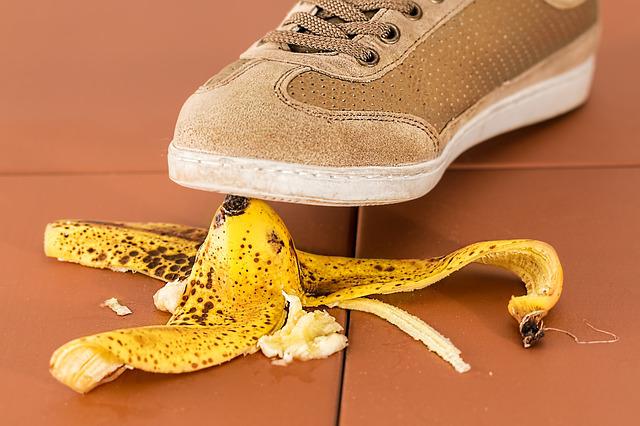
Everybody has fallen at some point, it is part of the process of learning to walk. Toddlers have very poor balance, you can see how they walk with their feet wide apart to help maintain their balance. As our bodies learn and adapt to being up on two feet, falling becomes a normal part of life. Children, adolescents and young people also fall because they are more likely to take risks.
Unfortunately, as we get older we have further to fall down and our bodies are less resilient. Each year, approximately one third of people over 65 will fall, this increases to one half of people aged over 80. It is good to know that there are some simple steps you can take to reduce your risk of falls.
Identifying risk factors for falls
A risk factor for falling is something which increases your chance of having a fall. Identifying risk factors is an essential component to preventing falls and this is what doctors, nurses and therapists would look for if they were assessing someone who has fallen. Identifying risk factors relating to yourself may help you understand why you may have fallen and may help you find some simple solutions.
Some risk factors may seem fairly obvious:
- Poor vision or poor lighting
- Poor gait (the way in which we walk)
- Poor balance
- Weak or stiff legs and feet
- Ill fitting shoes and slippers
But some risk factors may not be obvious:
- Fear of falling or low confidence
- Taking four or more medicines (regardless of what they are)
- Using a walking stick or frame (often because it is the wrong size)
- Depression or poor memory
- Being incontinent of urine
- Damage to nerves, particularly in the feet and joints
- Problems regulating blood pressure
When to see a doctor to reduce your risk of falls
If you have had a recent fall you are unfortunately at increased risk of having another one. Your G.P. may be able to refer you to a falls clinic if he suspects your fall was due to an underlying medical condition.
It is important to see a doctor if before you fell, you felt dizzy or faint, if you suspect you were having a seizure, if you had chest pains or any confusion, disorientation or speaking difficulty.
After a fall you might want to ask your doctor or pharmacist to review your medications especially if any of your tablets have side effects such as dizziness, sleepiness or are known muscle relaxants. You may also want to think about booking an eye test or a podiatrist appointment.
Physical activities such as Tai Chi, aqua aerobics, walking and dancing can help improve, strength, balance, coordination and posture.

Home hazards
Despite our homes being very familiar to us, home is the place where we most often fall. The familiarity can put us at a disadvantage. We may not notice things which are hazards because they have been present for so long.
Some changes which occur to our body as it ages may contribute to falls. For example, a stiffer or weaker hip or knee may make it more difficult to step over the door threshold. Or, our eyes’ ability to react to light and dark when moving from room to room may mean we don’t notice a pair of shoes on the floor.
Before you read on take this short quiz to see how safe your home is. It is always good to be proactive and take steps to age proof your home. With forethought and luck your home will remain a viable place to live for years to come.
Doorways
In poor lighting or for someone with poor vision or an abnormal gait, these can cause trips and falls. Ideally threshold should be painted in a contrasting colour so that they are easier to see.
Items on the stairs
We should try to keep our stairs and walkways clear. Sometimes our peripheral vision may not spot an item below or to the side of us, especially if it is a similar colour to its surroundings, or if the area is dimly lit.
Pets
We love our pets but sometimes they can trip us up. It might be useful to give your pet a collar with a bell so you will hear if it has walked up behind you.
Cables
Cords and wires are common hazards. Sometimes we do not even notice them if they have been there for years. Tucking cords and wires away into areas which are not used for walking is recommended.
Unsuitable footwear
Footwear can be an important contributing factor for falls. Whether it is high heeled shoes, worn out slippers or just ill fitting footwear this can increase our risk of falling. We also need to think about wearing shoes that are comfortable and will keep our feet healthy; as we have already seen, we need healthy feet to maintain our balance.
Patterned carpets
Some carpets may contribute to falls. Those which are patterned and contain different colours can act like camouflage, making it difficult to spot hazards on the floor.
Cluttered walkways
As our eyes become more slow to react to changes in light we may not spot a hazard when moving from room to room. Keep walkways clear and free of clutter. We may also need to to encourage our friends and family to be tidy too.
Mats and rugs
A very common cause of trips and falls. Ideally, if we are risk of falls we should try to remove mats and rugs. However, an alternative would be to tape them down so that free edges do not catch on the feet. Material can also be bought, to place underneath rugs, to stop them sliding on the floor.
Spills
Splashes of water (for example in a bathroom or kitchen) can cause slips. Try to wipe up any spills as soon as possible. Encourage your friends and family to do the same, especially if your grandchildren have a habit of making puddles!
Take care when getting in and out of a shower which has a lip, this could cause falls. Similarly, this mat would be safer if were fixed down, possibly with some non-slip material used on the reverse.
The garden
Our door step or path may also be a hazard. Think about when it may be slippery or hazardous- ice, snow, fallen leaves, pets and garden equipment. Often outdoor surfaces are more solid than indoors and the injury can be more severe following a fall.
It may be time to think about creating raised beds for your plants and trying to store your favourite tools at waist height.
Some of the information in this post comes from a short course Ageing well/preventing falls run by Newcastle University which I studied through Futurelearn. Unfortunately the course has now been retired and is no longer being updated.


3 responses to “How to reduce your risk of falls after 70”
Excellent information here! Choosing shoes with nonskid soles or adding stick-on nonskid pads to slippery soles has helped me. I’m a klutz, so I have to take a little extra care to stay upright.
FutureLearn has some fantastic courses. Thank you for sharing all of this. My parents are in their 70s and it’s something I’ve thought more about in terms of home risks, but less so about how they might be able to improve their strength and balance, like Tai Chi could help do.
Brilliant post and a very important issue given how dangerous falls can be as we get older.
Caz x
PS. Can’t remember if I said this, but I love the refreshed look of your blog! xx
Thanks I changed over to WordPress 2022 theme. It is a bit strange not to have a sidebar but it stops the posts looking too long on a mobile.